

How to measure the fineness of the ground turmeric from a Haldi grinding machine?
Aug 17, 2026
In the world of spice production, turmeric holds a special place due to its numerous health benefits and vibrant color. As a leading supplier of Haldi grinding machines, I've witnessed firsthand the importance of producing high - quality ground turmeric. One crucial aspect of this quality is the fineness of the powder. Finer turmeric powder not only has better solubility and a more pleasant mouthfeel but also may interact more effectively with other ingredients in various applications, from cooking to herbal medicine. In this blog, I'll share several reliable methods to measure the fineness of ground turmeric obtained from a Haldi grinding machine.
Sieve Analysis
Sieve analysis is one of the most traditional and widely used methods for measuring the particle size distribution of powders, including ground turmeric. This method is based on the principle of passing the powder through a series of sieves with different mesh sizes.
To conduct a sieve analysis for ground turmeric, you'll need a set of standard sieves, a sieve shaker, and a weighing scale. First, select a set of sieves with appropriate mesh sizes. For turmeric powder, common mesh sizes might range from 20 to 200 mesh. Place the sieves in descending order of mesh size, with the coarsest sieve on top and the finest at the bottom.
Weigh a known quantity of the ground turmeric sample, typically around 50 - 100 grams, and carefully pour it onto the top sieve. Then, secure the sieves in the sieve shaker and set it to operate for a specific period, usually 10 - 15 minutes. The shaking action allows the powder to pass through the sieves according to the size of its particles.
After the shaking is complete, carefully remove each sieve and weigh the amount of powder retained on it. Calculate the percentage of the total sample weight retained on each sieve. This data can be used to create a particle size distribution curve, which provides valuable information about the fineness of the ground turmeric. A higher percentage of the sample passing through the finer sieves indicates a finer powder.
Sieve analysis is relatively simple and cost - effective, but it has some limitations. It may not accurately measure very fine particles, and the results can be affected by factors such as the shape and density of the particles.
Laser Diffraction
Laser diffraction is a more advanced and precise method for measuring particle size. It works on the principle that when a laser beam passes through a dispersed particle sample, the particles scatter the light at different angles. The angle of scattering is related to the size of the particles.
To measure the fineness of ground turmeric using laser diffraction, you first need to disperse the powder in a suitable liquid medium, such as water or ethanol. This can be done using a sonicator or a stirrer to ensure that the particles are evenly distributed. Then, the dispersed sample is introduced into the laser diffraction instrument.
The instrument emits a laser beam through the sample, and a detector measures the intensity of the scattered light at various angles. Based on the scattering pattern, the instrument uses mathematical models to calculate the particle size distribution. The results are typically presented as a volume - based particle size distribution, providing detailed information about the size range of the turmeric particles.
Laser diffraction has several advantages over sieve analysis. It can measure a wide range of particle sizes, from nanometers to millimeters, and it provides rapid and accurate results. However, the equipment is relatively expensive, and it requires some technical expertise to operate.
Sedimentation Analysis
Sedimentation analysis is another method that can be used to measure the fineness of ground turmeric. This method is based on the principle of Stokes' law, which states that the settling velocity of a particle in a fluid is related to its size, density, and the viscosity of the fluid.
To perform sedimentation analysis, a known quantity of ground turmeric is dispersed in a liquid medium with a known density and viscosity. The suspension is then placed in a sedimentation tube, and the change in the concentration of the particles at different depths in the tube is measured over time.
As the particles settle, the concentration of particles at the top of the tube decreases, while the concentration at the bottom increases. By measuring the concentration changes at different time intervals, the settling velocity of the particles can be determined. Using Stokes' law, the particle size can then be calculated.
Sedimentation analysis is suitable for measuring relatively large particles and can provide information about the density and shape of the particles. However, it is a time - consuming process and may be affected by factors such as temperature and the presence of impurities in the liquid medium.
Importance of Measuring Fineness for Our Haldi Grinding Machines
As a supplier of Haldi grinding machines, understanding how to measure the fineness of the ground turmeric is of utmost importance. It allows us to ensure that our machines are producing powder of the desired quality. By using these measurement methods, we can fine - tune the settings of our grinding machines, such as the speed of the blades, the gap between the grinding components, and the feed rate of the raw turmeric.
For example, if the sieve analysis shows that the powder is too coarse, we may need to adjust the grinding gap to make it smaller or increase the grinding speed. On the other hand, if the powder is too fine, we can reduce the speed or increase the gap to achieve the optimal fineness.
Moreover, providing customers with information about the fineness of the powder produced by our machines can enhance their confidence in our products. Whether it's for large - scale spice manufacturers or small - scale home users, knowing the exact specifications of the ground turmeric, including its fineness, is crucial for making informed purchasing decisions.
Our Product Range and Their Role in Achieving Desired Fineness
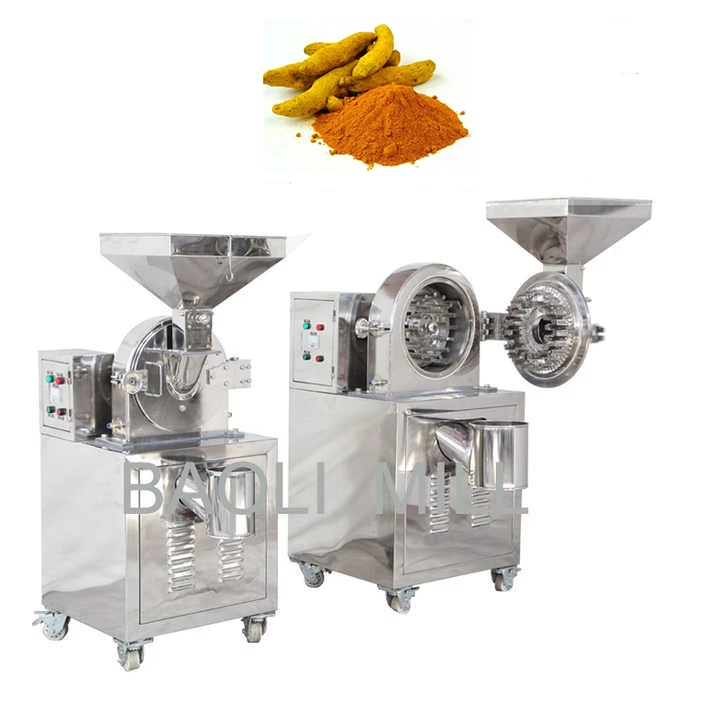
We offer a diverse range of grinding machines suitable for different production scales and requirements. Our Small Powder Grinder is ideal for small - scale businesses or home use. It is designed to produce fine powder efficiently, and with proper measurement and adjustment, it can achieve the desired fineness for turmeric powder.
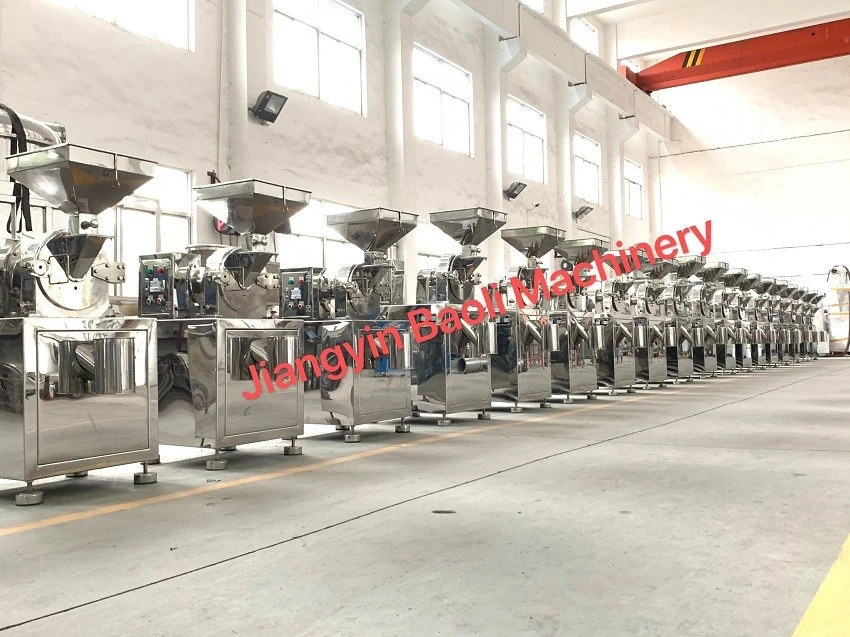
For larger - scale production, our Powder Grinding Machine is a powerful option. With its advanced grinding technology and adjustable settings, it can produce a large quantity of uniformly fine turmeric powder.
Our Turmeric Pulverizer Machine is specifically designed for processing turmeric. It is equipped with special grinding components that can break down the turmeric root into fine powder while preserving its flavor and nutritional value.
In addition, our Soybean Tissue Protein Powder Grinder also has the potential to be used for grinding turmeric in some cases, as it can handle various materials and produce fine powder. And our Powder Making Machine is a versatile option that can be adjusted to achieve different powder fineness for various applications.
Contact Us for Purchase and Consultation
If you're looking to purchase a Haldi grinding machine that can produce high - quality, finely ground turmeric, we're here to help. Our experienced team can provide you with detailed information about our products, including their performance, features, and how they can be adjusted to achieve the desired fineness.
We understand that every customer has unique requirements, and we're committed to providing customized solutions. Whether you're a small - scale spice producer or a large - scale industrial manufacturer, we have the right machine for you.
Don't hesitate to contact us for further details and to start a purchase negotiation. We look forward to working with you to meet your turmeric grinding needs.