


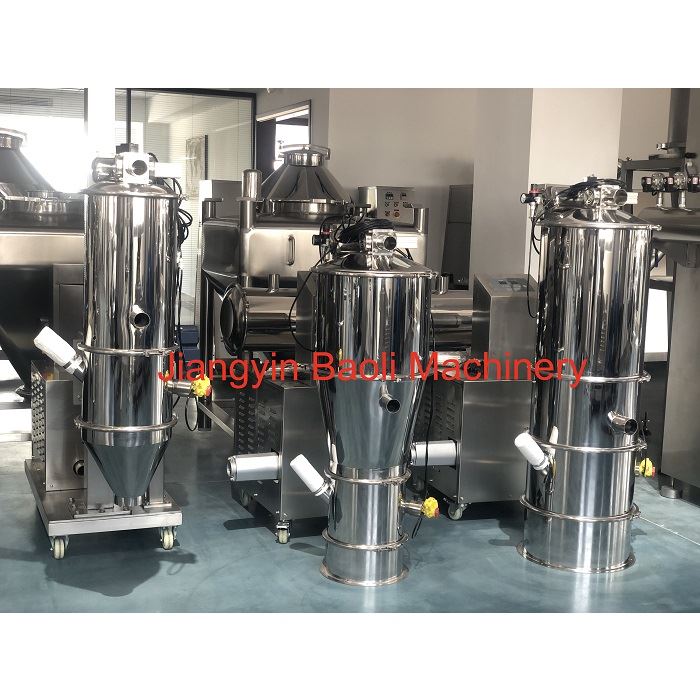
Industrial Vacuum Powder Feeder Conveyor
The ZKS series industrial vacuum powder feeder conveyor is a vacuum conveyor that uses an electric vacuum pump as the vacuum source. Using this vacuum feeder machine, materials can be directly conveyed from containers to mixers, reactors, hoppers, tablet presses, packaging machines, vibrating screens, rectifiers, granulators, wet granulators, dry granulators, and pulverizers. This vacuum powder feeder reduces labor intensity, eliminates dust pollution, and ensures production meets GMP requirements.
- Fast Delievery
- Quality Assurance
- 24/7 Customer Service
Product Introduction
Main Usage of Vacuum Powder Feeder
The ZKS series industrial vacuum powder feeder conveyor is a vacuum conveyor that uses an electric vacuum pump as the vacuum source. Using this vacuum feeder machine, materials can be directly conveyed from containers to mixers, reactors, hoppers, tablet presses, packaging machines, vibrating screens, rectifiers, granulators, wet granulators, dry granulators, and pulverizers. This vacuum powder feeder reduces labor intensity, eliminates dust pollution, and ensures production meets GMP requirements.

How Does A Vacuum Powder Feeder Work
The industrial vacuum powder feeder conveyor uses a vortex air pump to draw in air, creating a vacuum at the nozzle inlet and throughout the system. Powder and granules are drawn into the nozzle along with outside air, forming a material flow, which then travels through the suction pipe to the hopper. After gas and material separation, the material enters the receiving equipment. Feeding and unloading are accomplished by the continuous opening and closing of a pneumatic three-way valve, controlled by a cyclic time relay.

Technical Data of Vacuum Powder Feeder
| Model | ZKS-1 | ZKS-2 | ZKS-3 | ZKS-4 | ZKS-5 | ZKS-6 | ZKS-7 |
| Motor Power (kw) | 1.5 | 2.2 | 3.0 | 5.5 | 4 | 5.5 | 5.5 |
| Conveyoring Capacity (kg/h) | 400 | 600 | 1200 | 2000 | 3000 | 4000 | 6000 |
Note: Conveying capacity is measured with a 4-meter conveying pipe and flour as the conveying material. Longer conveying pipes result in lower conveying capacity, and the conveying capacity is also greatly influenced by the characteristics of the material.


Continuous vacuum powder feeders have become an ideal choice in the field of powder material transportation due to their advantages, such as high efficiency, continuous operation, automation, environmental safety, and strong adaptability. By optimizing production processes, reducing labor costs, and improving product quality, they provide reliable support for enterprises in achieving intelligent and clean production. When selecting a system, a customized design should be considered based on factors such as material characteristics, conveying distance, and production capacity requirements.


