

How does the material feeding rate affect the grinding result of a Moringa Leaf Grinding Machine?
Sep 04, 2026
Hey there, fellow Moringa enthusiasts! As a supplier of Moringa Leaf Grinding Machines, I've seen firsthand how different factors can impact the grinding process. One of the most critical factors is the material feeding rate. In this blog, I'll dive deep into how the material feeding rate affects the grinding result of a Moringa Leaf Grinding Machine.
The Basics of Moringa Leaf Grinding
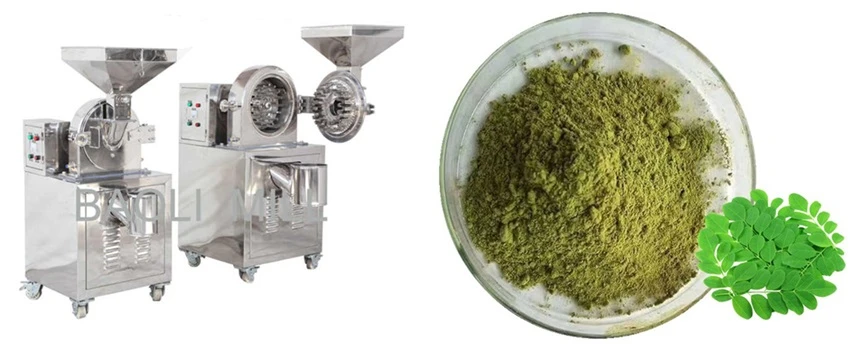
Before we get into the feeding rate, let's briefly touch on how a Moringa Leaf Grinding Machine works. These machines are designed to break down Moringa leaves into a fine powder. The process typically involves blades or hammers that smash and grind the leaves. The resulting powder can be used in various applications, such as dietary supplements, food products, and cosmetics.
What is the Material Feeding Rate?
The material feeding rate refers to the amount of Moringa leaves that are fed into the grinding machine within a specific time frame. It's usually measured in kilograms per hour (kg/h) or pounds per hour (lb/h). Controlling the feeding rate is crucial because it directly affects the grinding efficiency and the quality of the final product.
How the Feeding Rate Affects Grinding Efficiency
Low Feeding Rate
When you feed Moringa leaves into the machine at a low rate, the grinding efficiency can take a hit. Here's why:
- Under - utilization of the Machine's Capacity: A Moringa Leaf Grinding Machine is built to handle a certain range of material input. If you're only feeding a small amount, the machine's full potential isn't being utilized. This means that the energy consumed per unit of ground powder is relatively high. For example, if the machine is designed to process 50 kg/h of Moringa leaves efficiently, feeding only 10 kg/h will result in the same amount of energy being used to grind a much smaller quantity, leading to higher energy costs per kilogram of powder.
- Increased Grinding Time: With a low feeding rate, the leaves spend more time in the grinding chamber. This can cause over - grinding in some cases, where the powder becomes too fine and may even generate excessive heat. Over - grinding can also reduce the nutritional value of the Moringa powder, as some heat - sensitive nutrients may degrade.
High Feeding Rate
On the other hand, feeding the machine at a high rate has its own set of issues:
- Incomplete Grinding: When too many leaves are fed into the machine at once, the grinding elements may not have enough time to break them down properly. This results in incomplete grinding, and you'll end up with a powder that has a lot of coarse particles. For instance, if you overload the machine, large pieces of Moringa leaves may pass through the grinding chamber without being fully processed.
- Strain on the Machine: A high feeding rate can put a significant strain on the machine's motor, blades, and other components. This can lead to increased wear and tear, higher maintenance costs, and even cause the machine to break down more frequently.
The Impact on Powder Quality
Particle Size
The feeding rate has a direct impact on the particle size of the Moringa powder. A low feeding rate often results in a finer powder because the leaves have more exposure to the grinding elements. However, as mentioned earlier, over - grinding can occur. A high feeding rate, on the other hand, leads to a coarser powder with a wider range of particle sizes. In applications where a consistent particle size is required, such as in high - end cosmetic products, maintaining the right feeding rate is essential.
Nutritional Value
The nutritional value of Moringa powder can also be affected by the feeding rate. As I mentioned before, over - grinding due to a low feeding rate can generate heat, which may break down some of the heat - sensitive vitamins and antioxidants in Moringa leaves. A high feeding rate, with incomplete grinding, may not release all the nutrients effectively from the leaves, resulting in a powder with lower nutritional content.
Finding the Optimal Feeding Rate
So, how do you find the optimal feeding rate for your Moringa Leaf Grinding Machine? Well, it depends on several factors:
-
Machine Specifications: Every Moringa Leaf Grinding Machine has its own recommended feeding rate range. You should refer to the machine's manual to get an idea of what it can handle. For example, some machines may work best with a feeding rate of 20 - 30 kg/h, while others can handle up to 100 kg/h.
-
Leaf Characteristics: The moisture content, density, and size of the Moringa leaves can also affect the optimal feeding rate. If the leaves are very dry and light, they may require a lower feeding rate to ensure proper grinding. On the other hand, wetter and denser leaves may need a slightly higher rate.
-
Desired Powder Quality: If you need a very fine powder, you may need to adjust the feeding rate accordingly. You may need to experiment with different rates to find the sweet spot that gives you the right particle size and nutritional value.
-
Other Significance of Material Feeding Rate
The material feeding rate in a Moringa leaf grinding machine isn't just about the immediate grinding results; it has implications that ripple through the entire production process. For instance, in large - scale industrial settings, a consistent and optimal feeding rate can streamline the overall production workflow. It allows for better synchronization with other stages of processing, such as blending, packaging, and quality control.
On a financial front, getting the feeding rate right can lead to significant cost savings. As I've mentioned earlier, an improper feeding rate can lead to increased energy consumption and more frequent maintenance. By optimizing the feeding rate, you not only reduce these operational costs but also increase the lifespan of your grinding machine, which is a substantial investment.
From a product - consistency standpoint, the material feeding rate plays a key role in ensuring that every batch of Moringa powder meets the same high - quality standards. This is crucial for businesses that rely on brand reputation and customer satisfaction. Consistent powder quality also makes it easier to meet regulatory requirements, especially in industries where strict quality control is mandatory.
Related Grinding Machines
If you're interested in other types of grinding machines, we also offer a variety of options. Check out our Ultrafine Salt Powder Hammer Mill Pulverizer Grinder Machine, Powder Grinding Machine, Air Cooling Dried Chilli Grinding Machine, Natural Starch Food Powder Crushing Machine, and Powder Making Machine.
Conclusion
In conclusion, the material feeding rate is a crucial factor that significantly affects the grinding result of a Moringa Leaf Grinding Machine. Both low and high feeding rates can have negative impacts on grinding efficiency, powder quality, and the overall lifespan of the machine. By understanding your machine's capabilities, the characteristics of the Moringa leaves, and your desired powder quality, you can find the optimal feeding rate for your needs.
If you're in the market for a Moringa Leaf Grinding Machine or want to discuss how to optimize your grinding process, feel free to reach out. We're here to help you achieve the best possible results with your Moringa leaf processing.